Digital Hospitality:
Multi-Brand Ecosystem
Digital Hospitality:
Multi-Brand Ecosystem
Digital Hospitality:
Multi-Brand Ecosystem
Building a multi-tenant booking system and white-label UI theme that powered five distinct restaurant brands.
Building a multi-tenant booking system and white-label UI theme that powered five distinct restaurant brands.
Five unique brands, one content management system

project overview
Role: Web Designer & Developer
Company: 9H Capital (previously NIU Ltd.)
Company: 9H Capital (NIU Ltd.)
Timeline: 2-Month Rollout
Tools Used:




core focus
On-site Fieldwork & User Interviews
Fieldwork & User Interviews
Fieldwork & User Interviews
Conversion Optimization
Responsive Web Design & Development
Responsive Web Design & Development
White-Label Theme & CMS Architecture
White-Label Theme & CMS Architecture
the challenge
the challenge
the challenge
While at NIU Ltd., a hospitality client with five distinct restaurant brands, ranging from a high-class steakhouse to a Greek taverna, needed a complete digital overhaul.
While at NIU Ltd., a hospitality client with five distinct restaurant brands, ranging from a high-class steakhouse to a Greek taverna, needed a complete digital overhaul.
Their internal staff was overwhelmed by fragmented booking channels across phones, emails, and Facebook, while the existing online experience was causing massive drop-offs in reservations.
Their internal staff was overwhelmed by fragmented booking channels across phones, emails, and Facebook, while the existing online experience was causing massive drop-offs in reservations.
The goal was twofold:
design 5 completely unique visual identities that captured the specific ambiance of each restaurant
unify them under a single, standardized Content Management and Booking System that staff could easily learn and manage.
The goal was twofold:
design 5 completely unique visual identities that captured the specific ambiance of each restaurant
unify them under a single, standardized Content Management and Booking System that staff could easily learn and manage.
the research
the research
To inform the design strategy, I conducted on-site fieldwork to capture the unique aesthetic and atmosphere of each restaurant.
I also ran usability tests to develop user personas and identify exactly where the booking flows were failing the consumer.
To inform the design strategy, I conducted on-site fieldwork to capture the unique aesthetic and atmosphere of each restaurant.
To inform the design strategy, I conducted on-site fieldwork to capture the unique aesthetic and atmosphere of each restaurant.
I also ran usability tests to develop user personas and identify exactly where the digital booking flows were failing the consumer.
I also ran usability tests to develop user personas and identify exactly where the booking flows were failing the consumer.
I also ran usability tests to develop user personas and identify exactly where the booking flows were failing the consumer.
Notes and logos collected from in-person visits which
later informed design decisions for each brand
Notes collected from in-person visits which
later informed design decisions for each brand


User interview results interpreting
both sides of the booking ecosystem
the execution
the technical execution
Distinct UI Portals:
I rebranded and coded five unique design systems, using one theme, tailoring the typography, color palettes, and imagery to match each specific brand, while maintaining a consistent, high-converting UX across all sites.
Distinct UI Portals:
I rebranded and coded five unique design systems, using one theme, tailoring the typography, color palettes, and imagery to match each specific brand, while maintaining a consistent, high-converting UX across all sites.
Multi-Tenant Internal Tools:
To solve the staff's operational friction, I developed a shared UX framework using a unified WordPress CMS. This centralized architecture allowed staff to manage reservations, pricing, and menus for all five restaurants through one standardized, easy-to-learn backend dashboard.
Multi-Tenant Internal Tools:
To solve the staff's operational friction, I developed a shared UX framework using a unified WordPress CMS. This centralized architecture allowed staff to manage reservations, pricing, and menus for all five restaurants through one standardized, easy-to-learn backend dashboard.
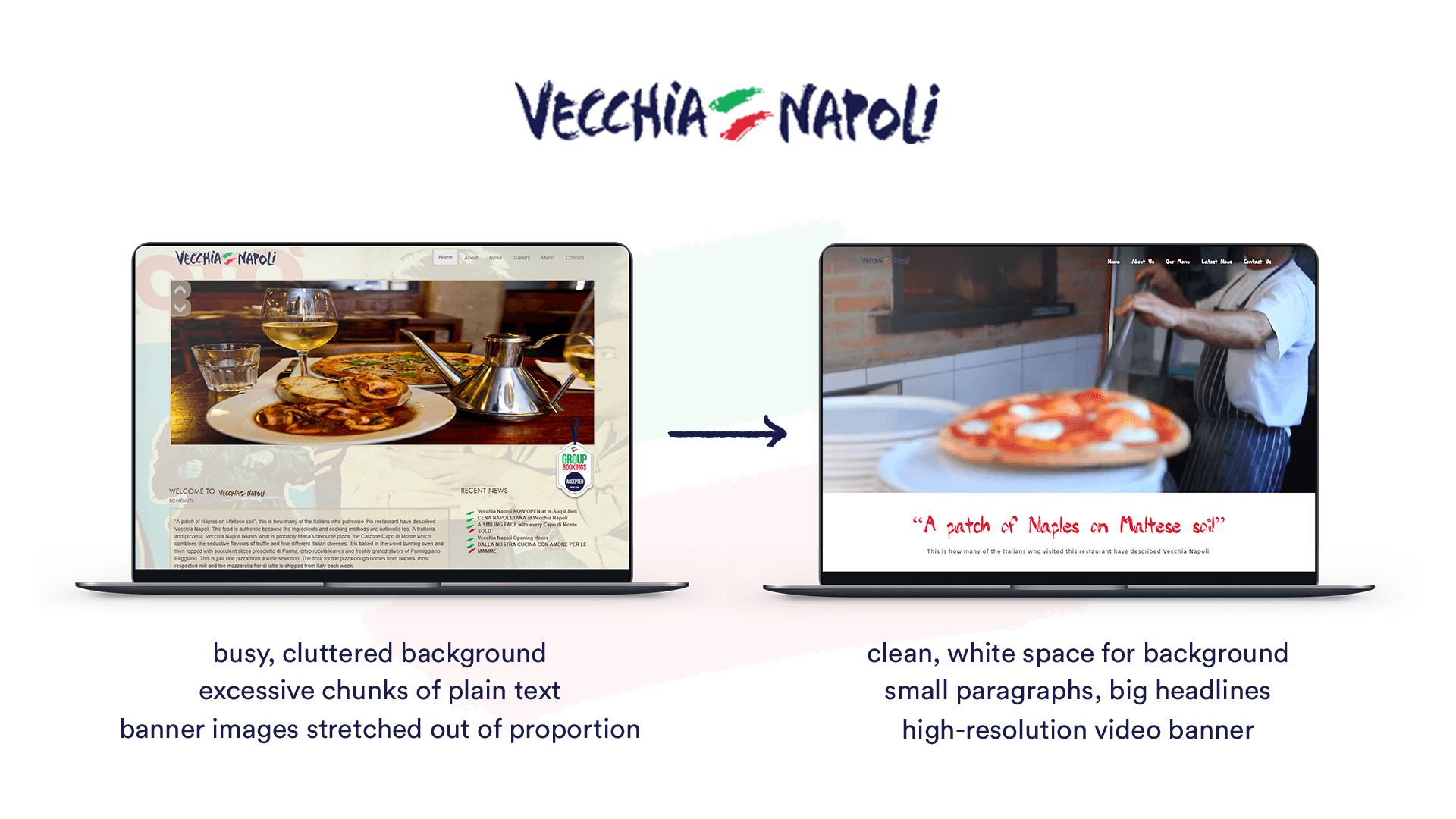
Client pitch visuals using implemented Proof-of-Concepts
which were built to get approval for the rebranding strategy
Client pitch visuals using implemented Proof-of-Concepts used to get approval for the rebranding strategy


The Bookings system developed as part of the Wordpress CMS
The Bookings system developed
as part of the Wordpress CMS
the impact
the impact
the impact
The new digital ecosystem dramatically reduced the administrative and operational burden on the restaurant staff by centralizing all fragmented booking channels into one platform.
The new digital ecosystem dramatically reduced the administrative and operational burden on the restaurant staff by centralizing all fragmented booking channels into one platform.
By optimizing the user flow and standardizing a prominent, frictionless "Reservation" UI across all five sites, the client achieved their highest number of reservations to date, culminating in a 15X increase in weekly online reservations.
By optimizing the user flow and standardizing a prominent, frictionless "Reservation" UI across all five sites, the client achieved their highest number of reservations to date, culminating in a 15X increase in weekly online reservations.
Ensuring all websites were responsive resulted in phones capturing
nearly half (40%) of all total bookings, in just the first month
Ensuring all websites were responsive resulted in phones capturing nearly half (40%) of all total bookings, in just the first month
